



PROGRAM
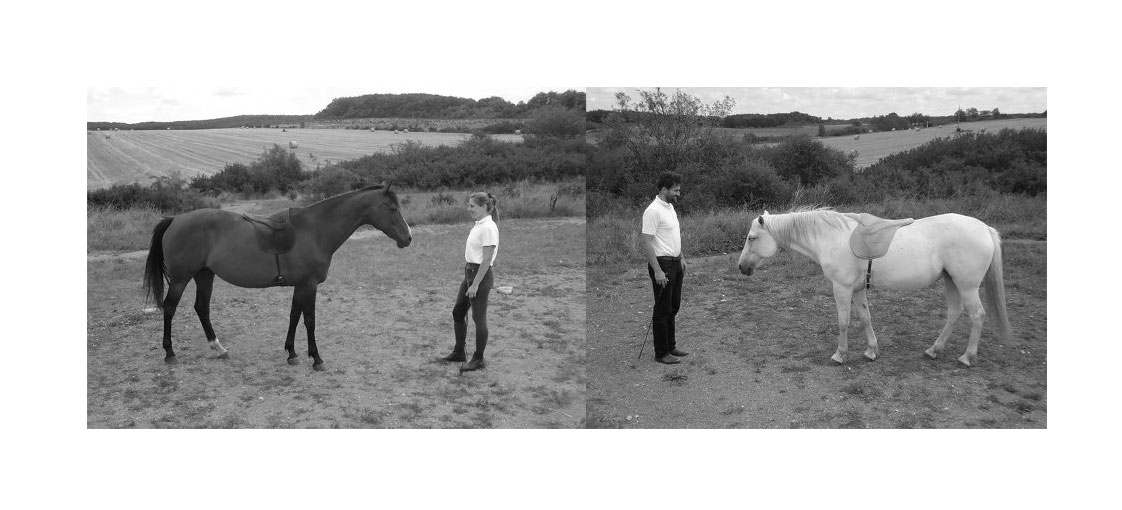
The Horse and Art Research Program was launched in 2015 for those who wish to study art and equestrian culture together. We primarily welcome visual artists and art researchers interested in horses and the place of the horse in art, but we are equally happy to welcome riders who are not artists themselves but are open to exploring these subjects. The program consists of intensive summer courses lasting one, two, three or four weeks. Alongside theoretical study, artistic practice and equestrian training play an essential role. Our starting point was the idea that riding is an art form. Since representations of humans and horses have evolved in parallel throughout art history, and horses have also been appearing with increasing frequency in contemporary visual art in recent years, we decided to initiate an international artistic debate around this subject. The response was overwhelming, and the success of the program encouraged us to continue and further develop the initiative.
Our plan is to organise the Horse and Art Research Program regularly each year, exploring a range of different themes. Our aim is to provide a platform for artistic practices rooted in both Eastern and Western traditions and to build connections through our program between Hungarian and international artists who wish to join our research. Among other things, we seek to explore the points of connection between equestrian culture and art.
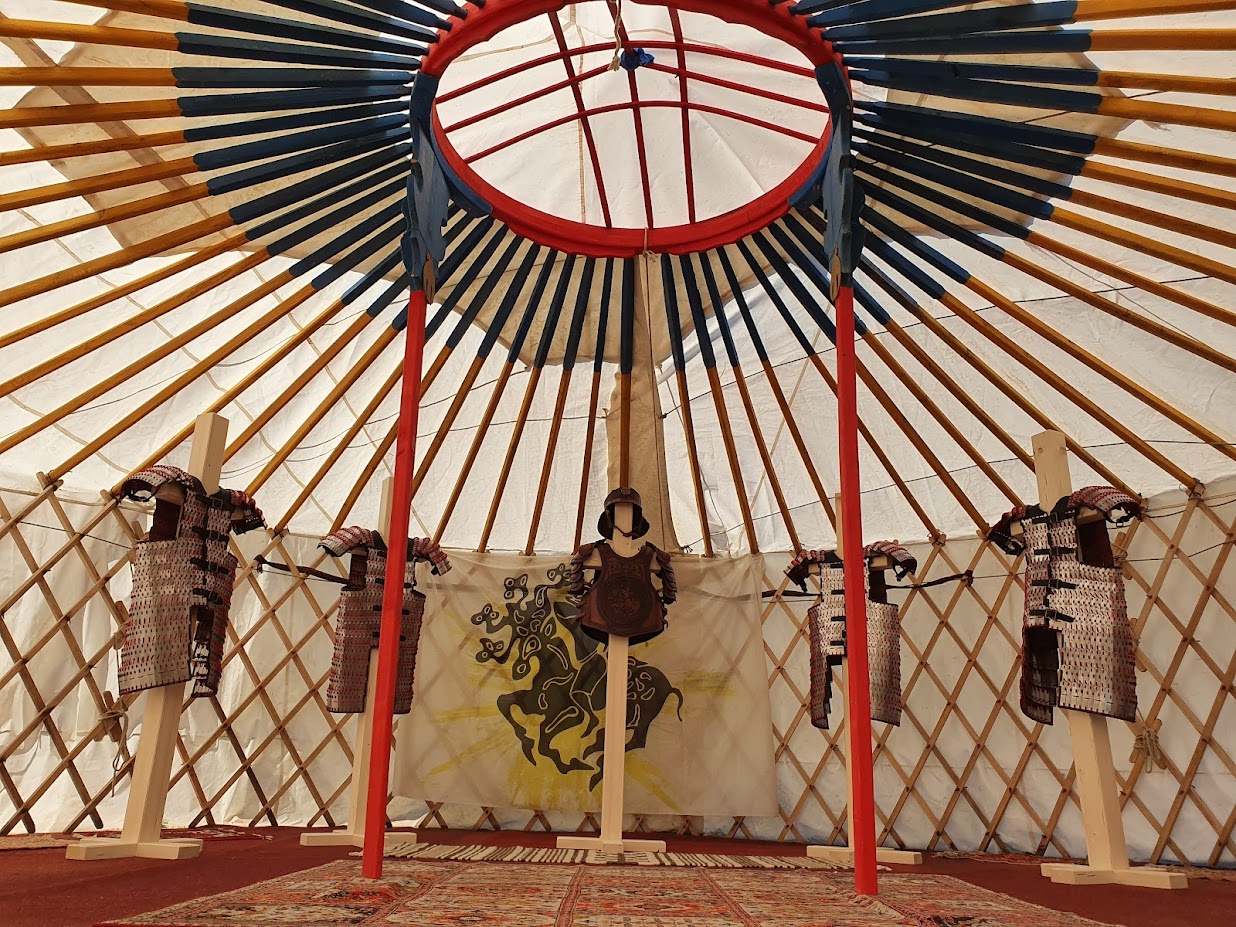
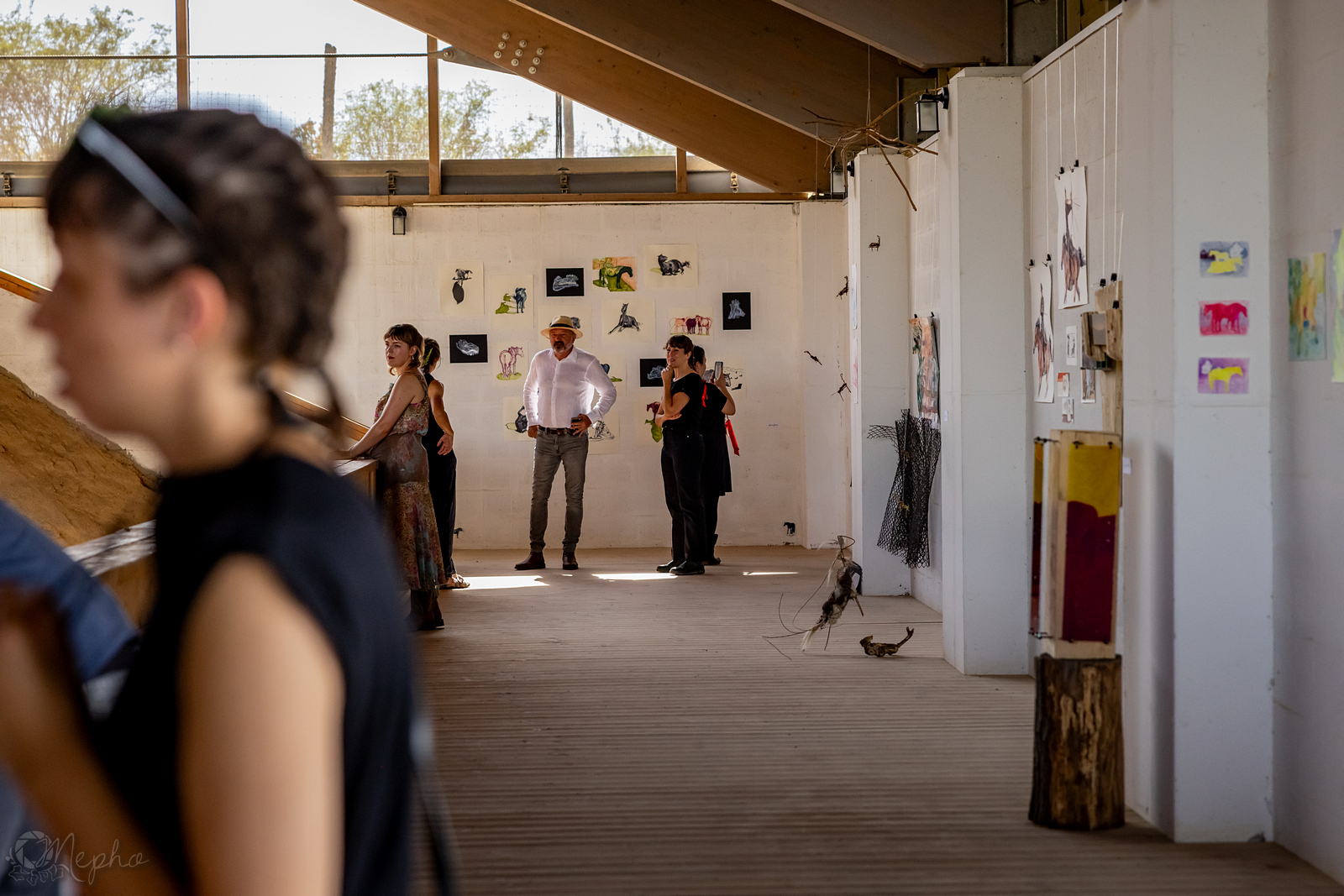
The first Horse and Art program took place in Barnag in August 2015, with ten participants. Artists from nine countries came from a variety of disciplines, including visual arts, design and contemporary dance. Since then, we have organised the program annually. We can accommodate up to ten participants per session. Accommodation is provided in traditional yurts, offering a nomadic living experience. Participants have the opportunity to exhibit their work at Lovarda Gallery. A good command of English is required to take part in the program.
In 2026, we launched the HARP Publications series.
Starting in 2027, we will also offer an individual artist residency program. Applications are welcome for one-month stays, with a maximum of three artists accommodated at any one time. Accommodation and individual studios will be provided in a beautifully renovated old barn. At the end of each residency, we will organise an exhibition showcasing the artworks created during the stay.
Artsy – 11 of the World's Most Unusual Artist Residencies
The artistic director of the Horse and Art Research Program is Szmrecsányi Veszely Beáta, visual artist and art researcher. The equestrian director is Márton Szmrecsányi, horse trainer and horsearcher. They have been collaborating on various equestrian and art projects since 2006. Since 2009, they have lived in Barnag with their three children and horses.
SZMRECSÁNYI MÁRTON
In 2009, a long-held dream came true when Márton moved to Barnag with his family, enabling him to live and work on his own land alongside his horses. He has lived here ever since with his wife, their three children, horses and other animals. He has been riding since early childhood and has practised mounted archery for approximately 30 years. Although his professional qualifications are in electrical engineering and economics, his lifelong dedication has been to horses and equestrian culture. He learned the fundamentals of riding from Eőry Csilla and later studied natural horsemanship. At Csontó Zoltán's Lovas Élet Iskolája (School of Equestrian Life), he completed the Parelli courses up to Level 3. He also studied craniosacral osteopathy and the fundamentals of equine chiropractic through courses taught by Bettina Pratt. At Honza Blaha’s courses, he studied collection without reins and the fundamentals of dressage without a bridle. He also studied Academic Art of Riding with and Dr István Boór-Gőblyös, Christopher Dahlgren, Kathrin Branderup and Bent Branderup, the grandmaster of the Danish highschool. He has been a member of the Kassai Horsearchery School and the World Federation of Equestrian Archery since 2005 and a member of its leadership since 2008, serving as a Törzsfő (leader) before receiving the title of Kán in October 2019. In 2016, he was inducted into the Hungarian Vitézi Rend in recognition of his contribution to preserving Hungary’s traditional equestrian culture and training the next generation of horsearchers. He conducts training sessions on a daily basis and regularly teaches courses throughout Hungary and internationally. He has represented the Kassai Horsearchery School at numerous international competitions, including the World Championship in Jordan, as well as at major equestrian demonstrations and shows such as the National Gallop at Heroes’ Square, the OTP Bank International Horse Show at the Papp László Budapest Sportaréna in Budapest, and the Mercedes CSI in Zurich, Switzerland. Between 2017 and 2020, he worked as a riding instructor at the National Ridingacademy in Hungary. In 2026, he became an official member of the Danish high school of riding, the Academic Art of Riding founded by Bent Branderup.
SZMRECSÁNYI VESZELY BEÁTA
Beáta completed her painting studies at the Hungarian University of Fine Arts and subsequently earned a Master of Fine Arts degree from Goldsmiths College, University of London, in 2000. She has been engaged in artistic research ever since and also began her doctoral studies there. In June 2017, she successfully defended her doctoral dissertation at the Hungarian University of Fine Arts, graduating summa cum laude. She has taught in art departments at several universities in both the United Kingdom and Hungary. She spent a total of eight years abroad, first in Glasgow, Scotland, where she taught in the painting department of the Glasgow School of Art, and later in London, where she became an active participant in the international art scene. In 2004, she returned to Hungary permanently and founded and directed the TIPP Postgraduate Research Program. For five years, this successful international research initiative, jointly organised by the Hungarian University of Fine Arts and Goldsmiths College London, took place at the university’s artist residency in Tihany.
Her work has been presented in numerous solo and group exhibitions in Hungary and abroad. Among the most significant was her exhibition at Modern Art Oxford in 2007. Other venues have included the Royal Palace in Prague, the Secession in Vienna, Chisenhale Gallery, the ICA, the Austrian Cultural Forum and Camden Arts Centre in London, Cornerhouse in Manchester, Project Arts Centre in Dublin, and private galleries and museums in Belfast, Glasgow, Edinburgh, Saint-Étienne in France, Vienna, Berlin, New Zealand, New York, Milan and Tokyo. In Hungary, her work has been exhibited at Kunsthalle Budapest (Műcsarnok), the Ernst Museum and the Ludwig Museum – Museum of Contemporary Art, where her work is included in the permanent collection. Her works are also held in several other public collections, including the Hiscox Arts Collection and Projects in London, the Albertina in Vienna and the Neue Galerie Graz in Austria, as well as numerous international private collections. She has received several awards and grants, including the Derkovits Scholarship, grants from the Scottish Arts Council and London Arts, and a British Academy scholarship.
Since 2015, she has co-directed the Horse and Art Research Program with her husband, Szmrecsányi Márton. In 2022, she founded Lovarda Gallery. She is a member of the public body of the Hungarian Academy of Arts (Magyar Művészeti Akadémia) and, since 2023, has been a member of its Veszprém Regional Workshop.
The central theme of her artistic practice was established as early as 1992, at the beginning of her university studies: the relationship between horse and human. She has been riding since early childhood, has been a member of the Kassai Horsearchery School since 2005, and taught at the National Ridingacademy between 2018 and 2021. Since 2025, she has been an active student of the Danish high school of riding, the Academic Art of Riding, founded by Bent Branderup and taught by Bent and Kathrin Branderup.
LOCATION
Barnag is one of the most beautiful small settlements of Árpád-era origins in the Balaton Uplands. The village was first mentioned in written records in 1082. It was once part of the estates of the Kinizsi family and later those of the Zichy family. In the eighteenth century, numerous families settled in the village from southern Germany. To this day, local residents distinguish between the German and Hungarian parts of Barnag. Behind St Martin’s Church lies a beautiful Calvary, whose Stations of the Cross feature works by Somogyi Győző, a painter awarded the prestigious Kossuth Prize. A dirt road leads from the village to Zádor Castle, offering visitors a wonderful hiking opportunity through the Balaton Uplands National Park. Barnag has barely 120 inhabitants and just one main street. Lake Balaton, Tihany, Balatonfüred and Veszprém are all approximately a fifteen-minute drive away.
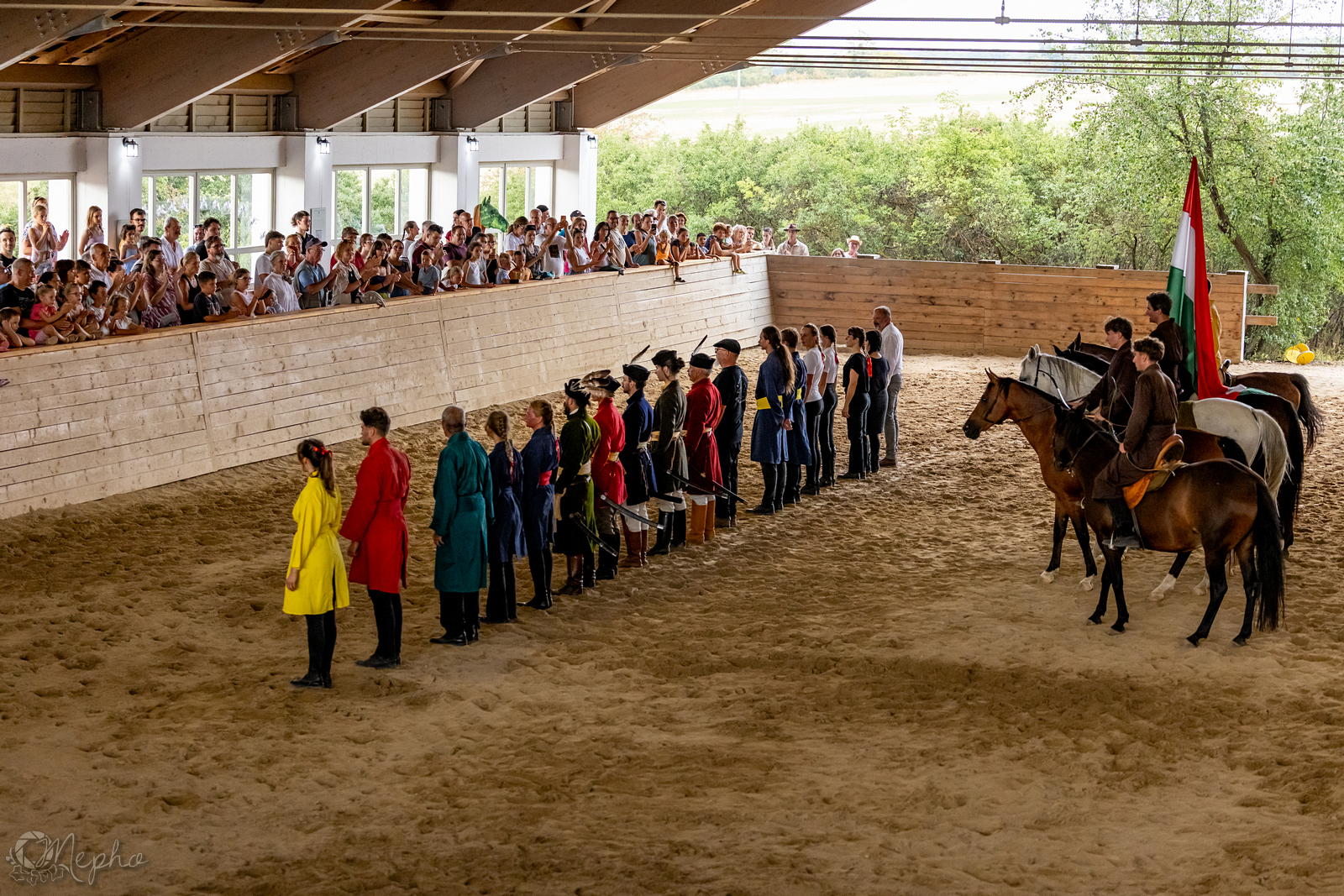
The small estate of the Szmrecsányi family and their association comprises a traditional nineteenth-century rural homestead, its adjoining stable, outdoor and covered riding arenas, and pastures. Traditional yurts have been erected beside the pond, where the family holds discussions and unconventional history lessons. The Kánság has its own World Federation of Equestrian Archery officialy approved horsearchery track. The horses live in a free-range environment, with access to a run-in shelter and wooded, tree-dotted pastures. The neighbouring Balaton Uplands National Park, with its remarkable birdlife, abundant wildlife, wooded hills and varied landscape, provides an ideal setting for diverse trail-riding activities.
The covered riding arena also houses a dedicated exhibition space and gallery suitable for visual art exhibitions.